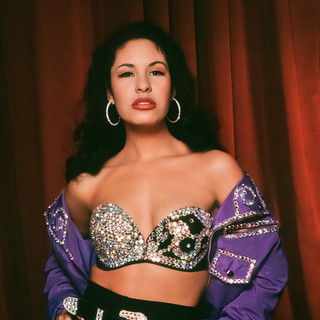
The story of Selena Quintanilla-Pérez remains one of the most poignant narratives in music history—a meteoric rise fueled by immense talent and a tragic end that solidified her status as a cultural icon. To understand Selena is to understand the American Dream through a bicultural lens: she was a girl from Texas who didn’t grow up speaking Spanish fluently, yet she became the “Queen of Tejano,” teaching herself the language phonetically to connect with her roots and her fans.
The Garage Days: Building the Foundation
Selena’s journey didn’t begin on a grand stage, but in her family’s garage in Lake Jackson, Texas. Her father, Abraham Quintanilla Jr., a former musician himself, recognized her talent early on and formed the band Selena y Los Dinos. Alongside her brother A.B. on bass and her sister Suzette on drums, the siblings became the family’s primary source of income after their father’s restaurant closed during the 1980s recession.
They spent years traveling in a cramped bus nicknamed “Big Bertha,” playing anywhere that would have them—weddings, quinceañeras, and small town fairs. In those early years, the industry was skeptical; Tejano music was heavily male-dominated, and many promoters doubted a young woman could front a successful band. Selena proved them wrong by winning Female Vocalist of the Year at the Tejano Music Awards in 1987 at just 15 years old—a title she would hold for the next nine years.
A Vision Beyond Music
By the early 1990s, Selena was more than a singer; she was a burgeoning mogul. Her fashion sense was as legendary as her voice. She DIY’d her own stage outfits, famously adding beads and sequins to “bustiers” that redefined Latin pop style.
She turned this passion into a business by opening Selena Etc., a chain of boutiques and salons in Corpus Christi and San Antonio. Her dream was to create a global brand that reflected her heritage and her modern style. This entrepreneurial spirit was paired with a massive heart; she was a frequent speaker at schools, urging children to stay in school, avoid drugs, and work hard for their dreams.
The Crossover and the Betrayal
In 1994, Selena reached a historic milestone by winning a Grammy for Best Mexican-American Album (Selena Live!). This success finally convinced her record label, EMI, to greenlight her English-language crossover album. She began recording tracks like “I Could Fall in Love” and “Dreaming of You,” poised to become the next global superstar.
However, the “fall” in Selena’s story was not a decline in fame, but a devastating breach of trust. She had entrusted the management of her boutiques and fan club to Yolanda Saldívar. By early 1995, the Quintanilla family discovered significant financial discrepancies. On March 31, 1995, during a confrontation at a motel in Corpus Christi, Saldívar shot Selena. She passed away at age 23, just months before her crossover album was set to change the world.
The Eternal Legacy
Selena’s passing was a moment of collective grief that stopped the world. When her album Dreaming of You was released posthumously, it debuted at number one on the Billboard 200, a first for a Latin artist.
Today, her legacy is visible everywhere—from the MAC makeup collections that sell out in minutes to the countless artists like Beyoncé and Selena Gomez who cite her as an inspiration. She is remembered not just for her “Techno Cumbia” or her incredible range, but for her warmth and the way she made people feel proud of their identity. As she once said:
“The goal isn’t to live forever, but to create something that will.”